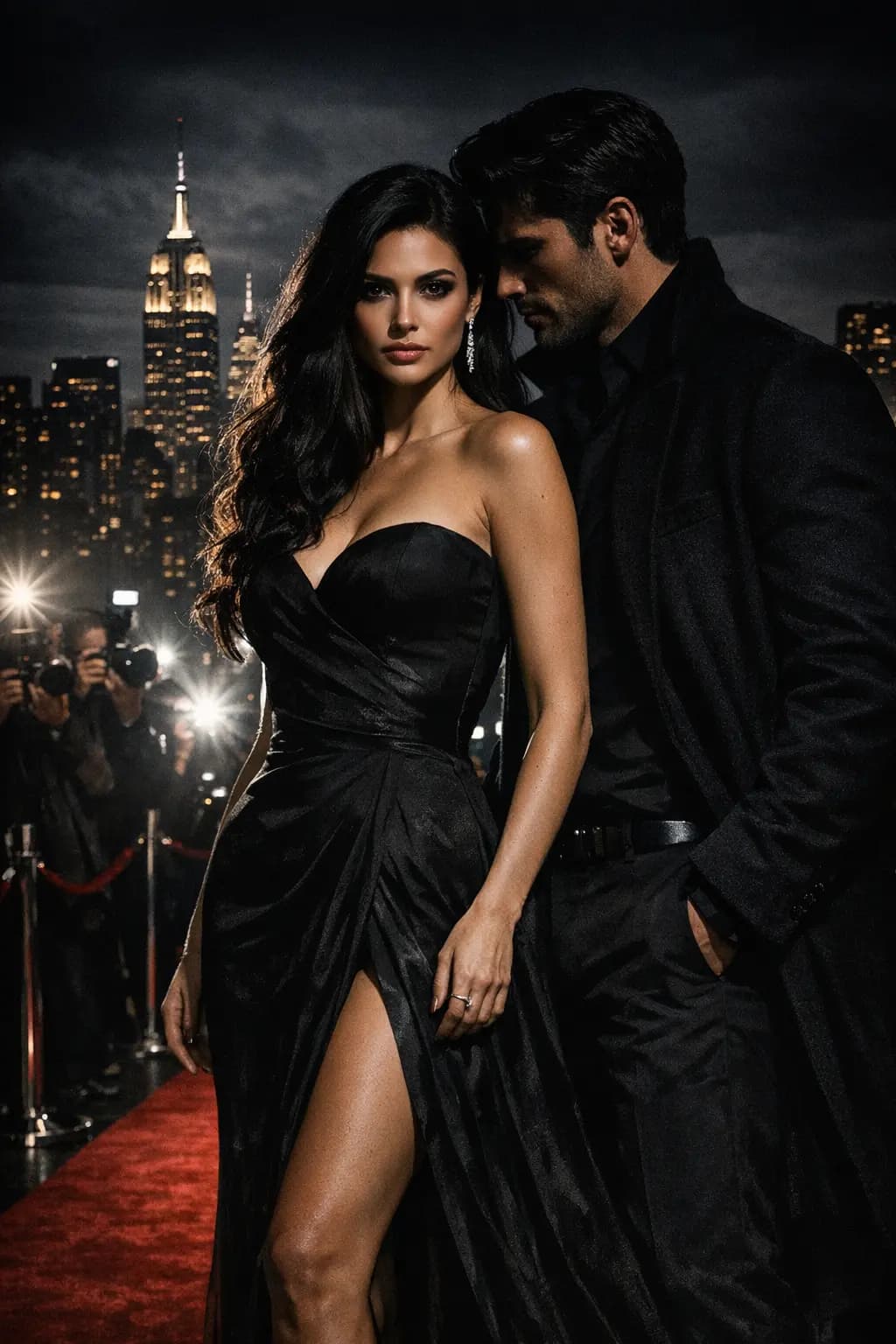
Idol
Dominic Steel
32 chapters4.783.4K reads
I was supposed to be a silent, beautiful object. I saw the man behind the god.
The video had forty-seven million views by noon.
Saint watched it on his phone, standing in the penthouse, barefoot on marble he couldn't feel, and felt absolutely nothing. Or maybe that was a lie. Maybe he felt everything and nothing looked different from the outside.
(The biographers would get this moment wrong. They'd say he was devastated. They'd say he threw things, screamed, wept. They wouldn't understand that destruction this complete doesn't look like chaos. It looks like stillness. It looks like a man watching himself burn and thinking: finally.)
On screen, Malik, his Malik, the kid he'd scraped off a SoundCloud page with forty followers, the artist he'd turned into a cultural moment, was crying. Beautiful tears. Photogenic devastation.
"He made me feel like I was nothing," Malik said to the interviewer. "Like everything I created belonged to him. Like I was just... a product."
The interviewer leaned in. They always leaned in for the kill shot.
"And the contract disputes? The ownership claims?"
"He owns everything. My name, my voice, my image. I can't even perform my own songs without his permission." Malik wiped his eyes with hands that had never known labor, wearing a watch Saint had bought him. "I was twenty years old. I didn't know what I was signing."
Cut to black. Title card: THE SAINT SYSTEM: An Investigation.
Forty-seven million views.
His phone buzzed. Lawyer. Publicist. Manager. His mother, who hadn't reached out in three years and probably needed cash. He cleared them all.
He walked to the glass. New York sprawled beneath him, indifferent. Millions of people who'd never know what it cost to build something from nothing, or what it felt like watching people who'd never built anything tear it apart.
(Here's what they didn't show in the documentary: Saint had discovered Malik in a bedroom in Queens. Had heard something in that raw voice that sounded like truth. Had spent three years and four million dollars turning potential into phenomenon. Had written half of Malik's biggest songs, produced the other half, created the aesthetic that made a nobody into a somebody. And when Malik wanted out, wanted to take everything Saint had built and pretend he'd built it himself, Saint had said no. That was his crime. Saying no.)
But none of that mattered now. The narrative had won. In the court of public opinion, Saint was the monster, and monsters don't get to explain themselves.
His phone buzzed again. This time he looked.
Marcus: You need to see this. Fashion Week footage. I found something.
Marcus was his head of talent, had been, anyway, before half the staff resigned in solidarity with artists who'd never met them. Marcus stayed because he understood something the others didn't: loyalty wasn't about agreement. It was about not running when the fire started.
Saint typed back: Send it.
The video came through. New York Fashion Week, yesterday's show. Some designer he'd never heard of, which meant they were either brilliant or would be bankrupt in six months. The camera panned across the runway, all those angular bodies in architectural clothing, and then,
Her.
She walked like she was carrying a secret. Not the performative strut of a model who'd learned confidence in a class, but something deeper. Something that said: I know things you don't, and I'm not going to tell you.
Her face gave nothing. Not blank exactly. Guarded, like she knew the value of stillness. Blank in a way that invited projection. You could see anything in those features. Innocence. Corruption. Salvation. Damnation. She was a screen waiting for an image.
Twenty seconds of footage. He watched it six times.
Marcus: New girl. Camille Fournier. French-American. First major season. Every agency's circling.
Saint's mouth twitched. Almost a smile. It sat wrong on him, like wearing someone else's clothes.
Saint: I want her.
Marcus: She's booked solid. The agencies are fighting over her. She's the face of,
Saint: Cancel them.
A pause. The dots appeared, disappeared, appeared again.
Marcus: You know what that'll cost?
Saint: I know what everything costs. That's why I'm rich and everyone else is borrowing money to pretend they are.
Another pause. Longer this time.
Marcus: What do you want her for?
What did he want her for? The question was so pedestrian it almost made him laugh. He wanted her because the world was trying to destroy him and he needed something beautiful to destroy first. He wanted her because forty-seven million people thought they knew who he was and he wanted to show them something new. He wanted her because she looked like a blank page and he was a man who'd spent his whole life writing.
But Marcus didn't need poetry. Marcus needed logistics.
Saint: Distraction. Arm candy. Someone for the cameras to look at while I figure out how to survive this.
Marcus: That's all?
Was it? Saint looked at the video again. That walk. That face. That quality of being entirely present and completely elsewhere at the same time.
Saint: That's enough. Make it happen.
He put the phone down. Walked back to the window. Forty-seven million people wanted him to fall, and he was about to give them something else to watch entirely.
The girl, Camille, would be his canvas. His statement. His proof that no matter what they took from him, he could still create something that made them look.
(And if something in her eyes reminded him of himself at that age, hungry, unformed, waiting to become something, well. That wasn't sentiment. That was recognition. That was one predator seeing another before they learned their claws.)
Below, the city kept moving. It always did.
None of them mattered.
Not anymore.
Not until she did.
Dominic Steel
I was supposed to be a silent, beautiful object. I saw the man behind the god.